
How to Learn Drawing as an Adult | A Practical Beginner’s Guide
Many adults believe they missed their chance to learn drawing.
Maybe you loved art as a child but stopped. Maybe you think talent matters more than practice. Or perhaps you simply don’t know where to begin.
The good news: drawing is not a skill reserved for children or naturally gifted artists. Adults often learn faster because they bring focus, discipline, observation skills, and the ability to practice intentionally.
If you’ve ever wondered how to learn drawing as an adult, this guide will show you a realistic path to start, improve, and enjoy the process.
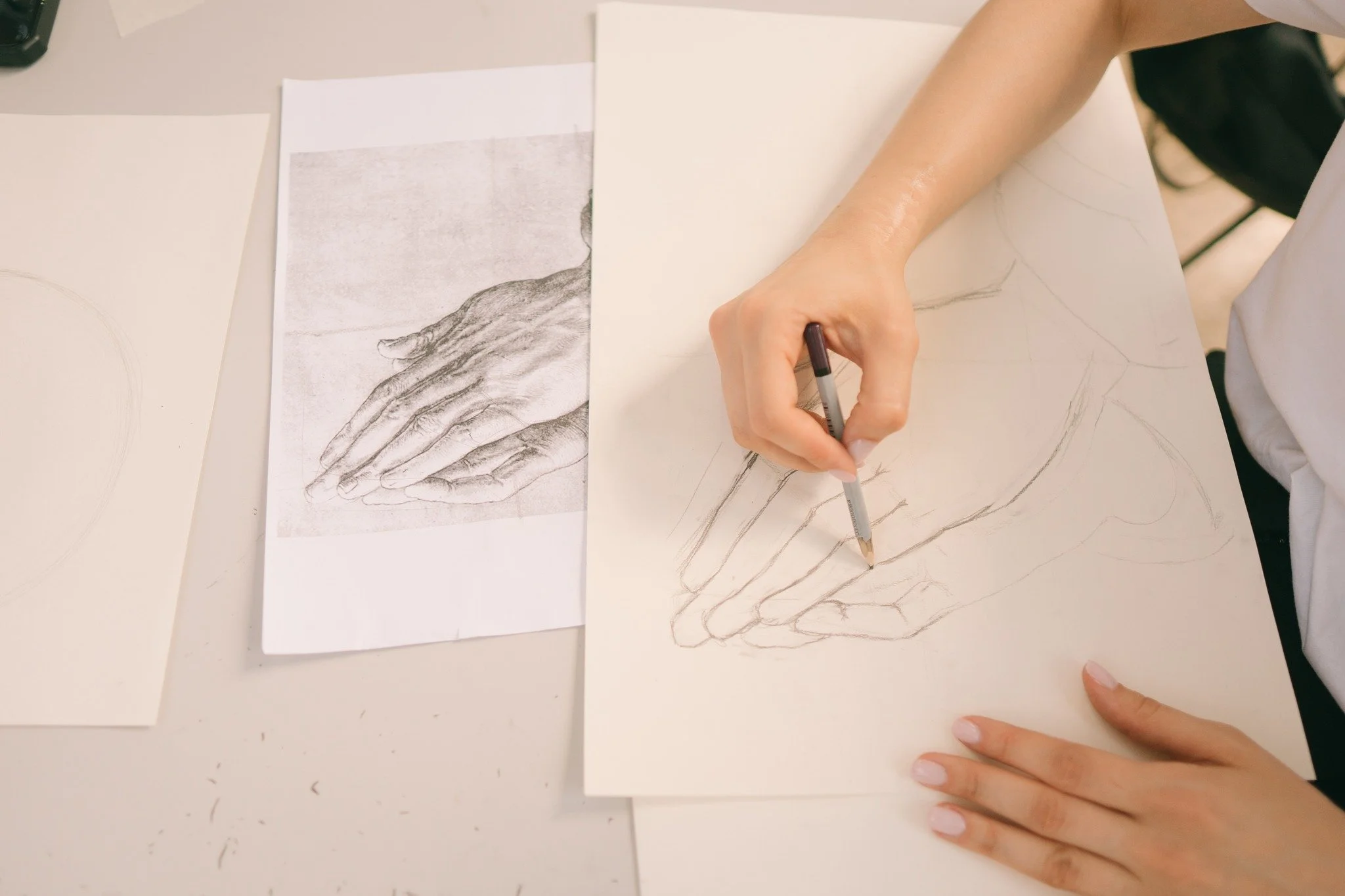
Can You Learn Drawing as an Adult?
Absolutely.
Drawing is a skill that develops through observation, repetition, and structured practice—not age.
Adults frequently progress quickly because they:
Understand instructions more easily
Build consistent habits
Analyze mistakes constructively
Set clear goals
The biggest challenge is rarely ability—it’s overcoming the expectation that progress should happen immediately.
Like learning a language or playing an instrument, drawing improves through regular practice.
Step 1: Start with Observation, Not Perfection
One of the most common beginner mistakes is trying to draw what you think something looks like.
Instead, learn to draw what you actually see.
Begin with simple objects:
A mug
A plant
Your hand
A chair
Everyday household items
Focus on:
Shape
Proportion
Angles
Light and shadow
At this stage, accuracy matters more than style.
Step 2: Learn the Fundamental Drawing Skills
Strong artists are usually strong observers.
Rather than jumping immediately into portraits or complex illustrations, build these foundations:
Line Control
Practice drawing smooth lines, circles, curves, and simple forms.
Shapes and Forms
Break complex subjects into:
Cubes
Cylinders
Spheres
Cones
This helps create believable structure.
Perspective
Understanding depth transforms flat sketches into convincing drawings.
Start with:
One-point perspective
Two-point perspective
Simple interiors and objects
Value and Shading
Learn how light creates dimension.
Practice:
Light source direction
Gradients
Contrast
Shadow edges
Proportion
Train your eye to compare distances and relationships between elements.
Step 3: Build a Simple Weekly Drawing Routine
Consistency beats intensity.
A practical beginner schedule:
15–20 Minutes Daily
Warm-up lines and shapes (5 min)
Observation drawing (10 min)
Reflection and notes (5 min)
Weekly Structure
Monday: Basic forms
Tuesday: Objects from life
Wednesday: Shading practice
Thursday: Perspective exercises
Friday: Free drawing
Weekend: Longer study session
Drawing four times per week for several months produces more improvement than occasional marathon sessions.
Step 4: Accept the “Awkward Stage”
Every adult learner experiences this moment:
Your eyes improve faster than your hands.
You begin noticing mistakes before you know how to fix them.
This is progress—not failure.
Keep your early sketches.
After several weeks, comparing old work to current work becomes one of the strongest motivators.
Step 5: Use References (Without Feeling Guilty)
Many beginners think using references is cheating.
Professional artists use references constantly.
Try drawing:
Everyday objects
Photos
Still life arrangements
Landscapes
Human poses
References teach:
Observation
Structure
Lighting
Composition
Over time, memory and imagination improve naturally.
Step 6: Create a Beginner-Friendly Workspace
You do not need expensive materials.
Start simple:
Essential Supplies
Sketchbook
HB and 2B pencils
Eraser
Sharpener
Optional later:
Charcoal
Colored pencils
Fine liners
Digital drawing tablet
The goal is reducing friction so drawing becomes easy to start.
Step 7: Learn With Feedback and Structure
Self-teaching works—but guided learning often accelerates progress.
A structured environment helps you:
Follow a progression
Receive corrections
Stay accountable
Build confidence
Art classes can also make drawing feel less intimidating and more enjoyable.
Many adults discover that learning in a supportive creative environment helps them continue long enough to see real results.
Common Mistakes Adults Make When Learning to Draw
Comparing Yourself to Professionals
Compare your work only to your previous drawings.
Buying Too Many Supplies
Skill grows from practice—not tools.
Quitting Too Early
Most visible improvement happens after sustained repetition.
Avoiding Fundamentals
Foundational exercises are what create freedom later.
How Long Does It Take to Get Good at Drawing?
Progress depends on consistency, but many adult beginners notice:
2–4 weeks: Better confidence and control
2–3 months: Improved observation and proportions
6–12 months: Noticeably stronger drawing skills
1–2 years: Solid artistic foundations
The timeline matters less than maintaining momentum.
Final Thoughts: It’s Never Too Late to Learn Drawing
Learning drawing as an adult is less about talent and more about showing up consistently.
You do not need to become a professional artist.
You only need curiosity, patience, and a willingness to practice.
Every artist starts with uncertain lines.
The difference is simply that they kept drawing.
If you’ve been waiting for the perfect moment to begin, start with one page today.
FAQ
Is 30 too old to learn drawing?
No. Adults of all ages can develop strong drawing skills through structured practice.
How many hours a day should I practice drawing?
Even 15–30 minutes consistently can create noticeable improvement.
Can adults become good at drawing?
Yes. Drawing is a learnable skill based on observation and repetition.
What should beginners draw first?
Start with simple objects, basic forms, and observation exercises before moving into complex subjects.
Is taking art classes worth it for adults?
Many adults improve faster through guided instruction, feedback, and a supportive creative environment.